
• Skip to primary navigation
  • Skip to main content
  • Skip to footer
Just Economy Institute

Just Economy Institute

A growing community of leaders using capital as a positive force for change

  • About
    • Purpose, Vision & Values
    • Making Change Happen
    • JEI Overview
    • Team & Advisors
    • Connect with Us
  • Fellowships
    • About Our Fellowship
    • FAQ
    • Become a Fellow
    • Community Agreements
  • Meet the Fellows
    • Current Fellows
    • Past Fellows
      • Cohort 8
      • Cohort 7
      • Cohort 6
      • Cohort 5
      • Cohort 4
      • Cohort 3
      • Cohort 2
      • Cohort 1
    • All Fellows
  • Media
    • Collaboration Stories
    • In the News
    • Newsletters
    • Video Library
  • Donate
    • Make a donation
    • Donors and Supporters

Reflections from Fellows

Alone Our Work Wasn’t Enough

June 1, 2023

By Aisha Nyandoro

Springboard Families (Springboard To Opportunities)

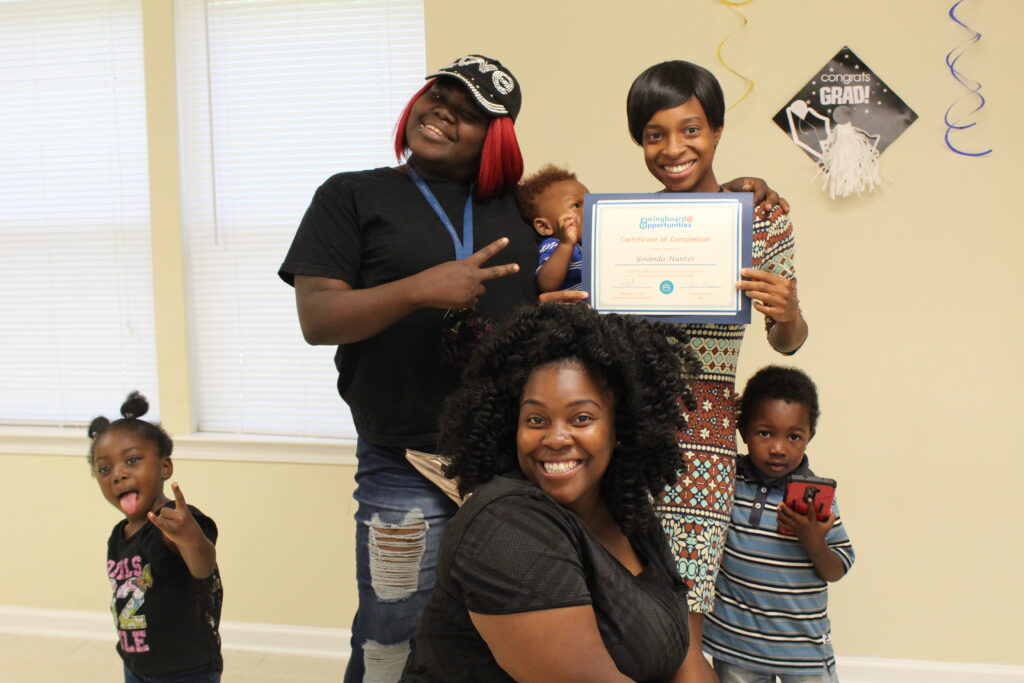
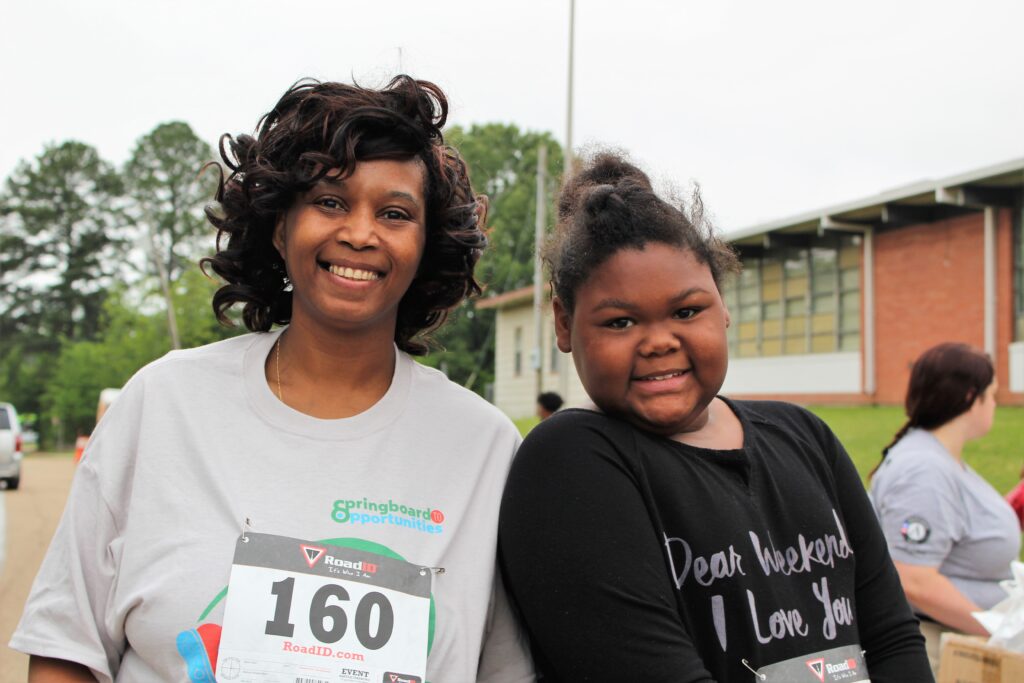
I am the founding CEO of Springboard To Opportunities, a nonprofit organization in Jackson, Mississippi helping families living in affordable housing reach their goals in school, work, and life. We are a radically resident-driven organization, meaning that we trust families to know better than anyone else what it is that they need to reach their goals and design our priorities and plans as an organization according to their voices. In 2018, this led to the creation of the Magnolia Mother’s Trust (MMT), which I have the honor of leading: a guaranteed income program which provides $1,000 a month to extremely low-income Black mothers residing in affordable housing in Jackson, MS. The Magnolia Mother’s Trust was the first to center the narrative of economic justice with gender and racial justice lenses. 

The project uses a guaranteed income to provide Black mothers with the financial resources ($1,000 per month /12 months) needed to actualize their goals. Recognizing the isolating effects of poverty and the importance of social capital, the project also offers a community of support. Finally, this project takes a two-generation approach by establishing children’s savings accounts for each child of a MMT mother. Currently moving into the fifth year, the program is the longest-running guaranteed income pilot in the United States since the Nixon administration’s Negative Income Tax experiments that began in the late ‘60s.

To provide some level setting, a guaranteed income helps build a robust floor under which no one can fall. Guaranteed income is meant to supplement, not supplant existing social safety net benefits. It is grounded on the values of trust and respect for recipients with a fundamental commitment to preserving and reinforcing the freedom of choice and dignity of individuals and families. The proposal has been championed as a means of ending poverty, reducing social inequalities, and promoting gender and racial equity.

In the five years in which I have championed for guaranteed income and led in this space, I have seen the field explode. There are currently over 100 guaranteed income pilots being implemented in this country, over 27,000 families are benefiting from the relief that comes with knowing that they will have a steady influx of cash coming into their home. This reality is beautiful, but it’s not enough. 

Springboard Families (Springboard To Opportunities)

Leading in this space, I have learned a few lessons that are relevant to the Just Economy Institute (JEI) family. But the biggest lesson I have been sitting with lately is that cash is not a balm that solves all ailments. Yes, cash is important, it helps make the stickiness of life a little less sticky, but it is just one solution needed to help cure the ongoing impacts of poverty. Whether it is the effects of not having access to physical or mental health care, working numerous jobs that take away a parent’s ability to spend time with her children, or overcoming the traumatic effects that come from constantly living in a state of scarcity, the effects of poverty are numerous. While cash is certainly a starting point, it is not a silver bullet that can cure all without additional supports and care.

Earlier this week, I received an email that one of the very first moms we supported with MMT lost her 18-year-old daughter to gun violence – a domestic dispute. This mom had successfully moved her family out of affordable housing, but they still lived on the fringes of poverty. Our work as cash advocates wasn’t enough to outrun the lackluster gun polices we have in this country or the limited mental health support we provide. 

Alone our work wasn’t enough. 

But here is the reality; I should not have to be alone in this work. I cannot be alone in this work. We often want to silo others or even ourselves into neat titles and boxes, but the work of creating a true, just economy is going to take more than what just one of our boxes can offer. It is tempting to keep our work tied up in little boxes because it allows us to believe that what happens outside the scope of our work isn’t our problem – just like it can be tempting to believe what happens to a family in Jackson, MS isn’t our problem. But only our current unjust and inequitable systems benefit from this kind of isolated and individualistic thinking. 

When we ask our families to define wealth or prosperity, they talk about so much more than just having money in their bank account. They talk about having enough to support and help out their friends and families in times of crisis or need. They talk about having space to relax, practice self-care, or spend time with their children. They talk about being in a safe and thriving community where they and their neighbors are able to have their needs met. Wealth for Springboard families is not just about net worth or asset values; its about whole thriving communities. And that takes all of us.

The reality is what happens to the least of us happens to all of us. And this is what I hope the JEI family understands: all our work must cross over neat little lines or boundaries because the plethora of challenges are too insurmountable to be solved by one solution. Together, we can imagine a world that is not oriented around a single solution but recognizes that we all have a part to play in building a more equitable future. 

Springboard Families (Springboard to Opportunities)

Aisha Nyandoro is the founding CEO of Springboard to Opportunities, a Jackson, MS nonprofit that uses a “radically resident-driven” approach to end generational poverty. In 2018, she created the Magnolia Mother’s Trust – now the country’s longest-running guaranteed income program. In addition to leading Springboard’s community work and growing the Magnolia Mother’s Trust exponentially, Aisha is focused on shifting gendered and racialized narratives around poverty and deservedness, and working to show how the success of the Trust can be scaled nationally through policies like the expanded Child Tax Credit and a federal guaranteed income. Her expertise on economic, racial, and gender justice issues is regularly featured in outlets including The New York Times, The Washington Post, Amanpour & Company, Essence Magazine, NBC Nightly News, and CNN. She is a TEDx speaker and a fellow of the Highland Project, W.K. Kellogg Foundation Community Leadership Network, and Ascend at the Aspen Institute. She is a 2022 McNulty Prize Winner and the 2022 Disrupter Change Champion from Community Change. She holds a B.A. from Tennessee State University, and an M.A. and Ph.D. from Michigan State University. When not working to liberate financial capital, she is a wife and mom to two very charming sons.


Filed Under: Uncategorized Tagged With: Reflections from Fellows

Make Them Endure, Give Them Space 

April 11, 2023

By Daisha Versaw

Zombie Sock Hell

We were three hours into a two hour Zoom meeting when it dawned on me, we were in hell. 

For fifteen months, our group had been engaged in a moldy sock of an argument that threatened to resurrect decades-old ideas—ideas already known to be harmful. Yet, there we were, caught in a never-ending tug-of-war, unable to toss that sock in the trash where it belongs, all due to who sits where in the hierarchy, the power of money, being civil, ego, and all the “isms” that stifle some voices and make others feel entitled to be loud. 

The day after our meeting, I could not get out of bed. The morning I paused to admit my exhaustion, my friend, Erin, called. It wasn’t a long conversation. She was on the road, and I was home with the covers pulled over my head. She talked as she drove. I cried as I listened. 

I don’t remember exactly what she said, but her words reminded me of a passage in Crossing the Unknown Sea: Work as a Pilgrimage of Identity, by the poet David Whyte. Quoting something his friend David Steindl-Rast once said to him, he writes: 

“You know that the antidote to exhaustion is not necessarily rest? The antidote to exhaustion is wholeheartedness. You are so tired through and through because a good half of what you do here in this organization has nothing to do with your true powers or the place you have reached in your life. You are only half here, and half here will kill you after a while… You must do something heartfelt, and you must do it soon.”

Those words, echoing and building on Erin’s, helped me notice how much energy I was burning on things I didn’t care about—like that zombie sock of an argument that refused to die. I had so little left for what was truly wholehearted. I needed to do something heartfelt and soon.

Something Heartfelt

Around this same time, my friend and former teacher, Cindy Willard, shared a glowing post on LinkedIn about the Just Economy Institute (JEI), which was accepting applications for their 2022-2023 fellowship. Curious, I researched JEI and learned more about how they approach their mission to “educate, support and connect financial activists who are shifting the flow of capital and power to solve social and environmental problems.”

I don’t think of myself as a financial activist, but I do believe our economy and broader world need a drastic shift to make it possible for us to better care for each other and our planet. Over the years, I’ve looked for my own small part in that shift through supporting small businesses and grassroots nonprofits, local investing, local food systems, and trust-based philanthropy. I’m grateful for all I’ve learned and been part of, but finding my way often feels slow, isolated, and meandering.

The idea of having more guidance and being able to learn and practice this work in community felt like the possibility of rain in the desert. 

Paicines Ranch, October 2022 (Daisha Versaw)

Make Them Endure, Give Them Space

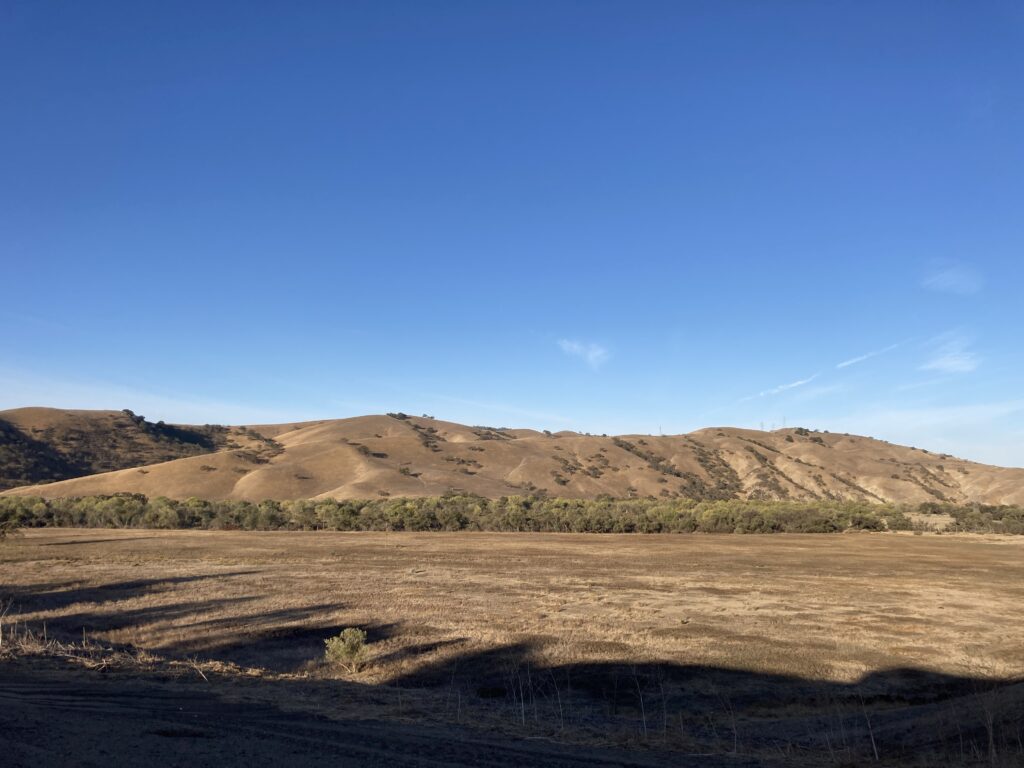
In October of 2022, my cohort came together at Paicines Ranch in CA for the first of three week-long immersions. Coming from the Pacific Northwest and being a solid introvert, I couldn’t have been further out of my element than I was surrounded by dry dusty hills and so many new-to-me people. But if I had to sum up that week in two words, what comes to mind is the phrase “not hell” as Italo Calvino described in his novel, The Invisible Cities:

“The hell of the living… is already here… There are two ways to escape suffering it. The first is easy for many: accept the hell, and become such a part of it that you can no longer see it. The second is risky and demands constant vigilance and apprehension: seek and learn to recognize who and what, in the midst of hell, are not hell, then make them endure, give them space.”

We are two-thirds of the way through our fellowship, and I’m already appreciating how being part of it continues to give me new opportunities to look up from the daily hell that surrounds us (from zombie sock arguments to much harsher realities) and recognize who and what are not hell. I’ve found so much that I want to endure, so much I want to give space to.

Raising the Canopy

Paicines Ranch has a vineyard where they’ve raised the fruiting canopy level so that harvesting is easier on the human workers, and so the sheep can graze on weeds and prune the vines all year round (vs. only grazing in the dormant season, which is common). Making this small change has improved soil health, biodiversity, and resilience in the face of drought.

The people and stories I’m connecting with through JEI have a similar spirit to that vineyard. They’re all raising the canopy through creative solutions, mending and healing, building new systems, showing up in love, investing in future generations, and working to shift our culture in ways that bring our collective reality into more harmony with humanity and nature. 

I’ve loved learning from the regenerative approach of the Right Relations Collaborative, where Cúagilákv (Jess Housty), Kim Hardy, and the Aunties Council are transforming the way funding flows into communities, creating a visionary space that rightly honors the guidance of Indigenous leaders, and finding joy together along the way. I’m grateful to be gaining a deeper belief that we all belong here in this work, just as we are—from those of us who naturally calculate liquidity ratios to those of us who build relationships to those of us who are poets. And it’s been a total delight to find new opportunities to personally support things that matter, like the systems-change my friend, Christopher Williams, and their co-founders are giving life to through The COWRIE Initiative’s  Bank Black USA program and beyond.

From Not Hell to Abundance

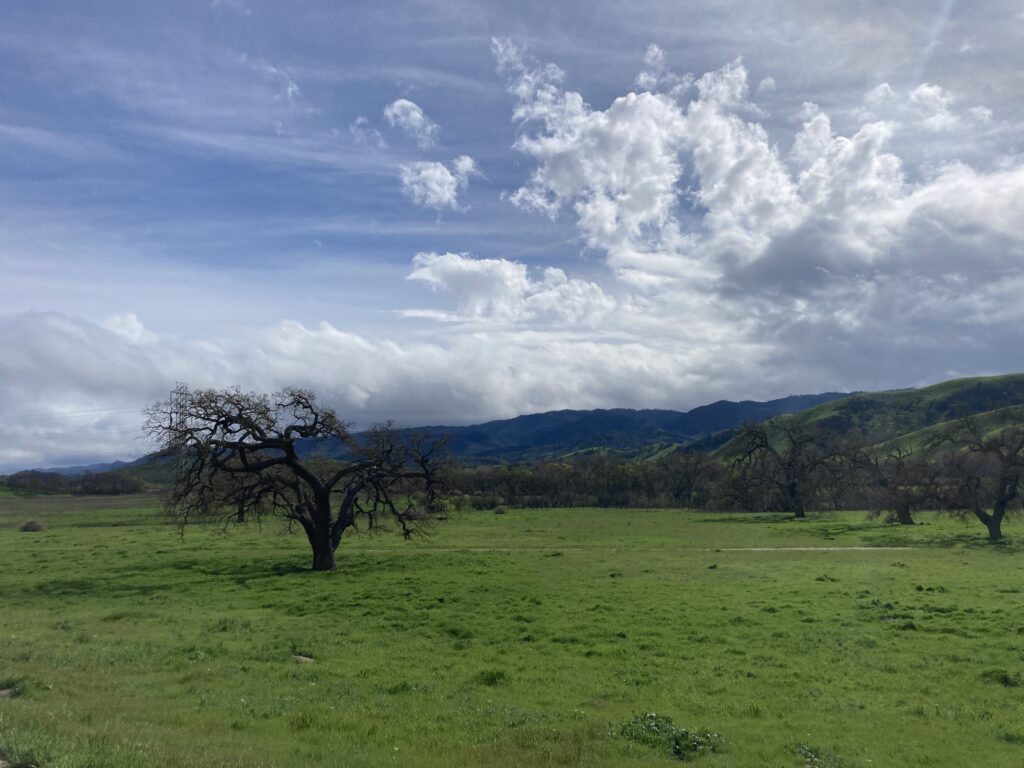
In March of 2023, our cohort gathered again at Paicines Ranch. In the time between our visits, abundant rains had rolled through CA, ending a 22-year drought. The earth’s response was breathtaking in ways we couldn’t have imagined in October. The previously brown hills rippled with beauty in every direction—lush green grasses, brilliant yellow swaths of common fiddleneck, and orange California poppies nodding on delicate stems. In the lowlands below the hills, the vernal ponds had come back, reviving some species that had remained dormant for years as they waited for better conditions.

Our cohort was transformed as well. October’s hesitant introductions became March’s joyful embraces. Our conversations held more bravery, more honesty, more soulfulness, and more laughter. We’d become a community.

I’m writing these words one full year after the zombie sock Zoom meeting that pushed me to do something heartfelt, but this isn’t a story with closure. It’s a story about changing seasons, gratitude, and the hopefulness of possibility. This time last year, I didn’t know any of these people who’ve become so important to me now, and that makes me wonder how many other people exist beyond my awareness who are just as creative, brilliant, dedicated, and kind. I’m wondering what else is not hell. I’m wondering how much abundance is dormant and waiting for time—or perhaps for us—to bring about better conditions. 

Paicines Ranch, March 2023 (Daisha Versaw)

Daisha Versaw is a story & strategy consultant based in Olympia, WA. When she is not fiddling with a system map, investing in local sauerkraut, strengthening a grassroots organization, or plotting a mutiny, you’ll find her teaching her three teen boys how to cook, wandering a beach or rainforest with her husband on the lands of the Coast Salish people, sharing a poem, or around the fire with friends.


Filed Under: Uncategorized Tagged With: Reflections from Fellows

Sustainability is Not Enough: from Stewardship to Reciprocity 

January 5, 2023

The following is an excerpt from a speech to the George J Mitchell Center for Sustainability Solutions, University of Maine at Orono, on November 28, 2022 by Roger Milliken (JEI alum, cohort 2, 2018-19)

I want to reflect on my experience caring for 150,000 acres of forest at Baskahegan, a company founded by my grandfather in 1920. Now that I am retired, I feel less torn by, and therefore freer, to talk about the conflicts between economics and care for nature.  I want to invite you into a frank exploration of the tensions between Western cultures and the continuation of our lives on Earth.  

We are living in a time of apocalypse.  You know the litany:  500-year floods coming every few years.  One third of Pakistan flooded and millions displaced. Intense droughts and catastrophic wildfires in Australia and the American West.    Last year on the coast of British Columbia, heat waves actually cooked marine animals in their shells …  The word apocalyptic fits these times, and not only its sense of “catastrophic.”  The other, the root meaning of apocalypse, is the removal of a veil that has obscured the truth.  Now, if we choose to look, we see what we have done and continue to do. 

How much has already unraveled? How much will we continue to destroy?  Why? 

I view our heedless rush toward the destruction of nature as a direct result of Western world views, based in individualism, separation and dominion.  These views drive our economic system to convert to cash as much of nature as possible, with little thought for the effects on future generations of humans—let alone the more-than-human world of which we are but a small part. 

What do I mean by ‘separation and dominion?’    My sixth great grandfather on my father’s side arrived in Boston in the late 1600s, a Scots-Irish refugee fleeing poverty and religious persecution. He and the other settlers saw the lands and waters as other—to which they had rights but to which they bore no responsibilities.   

How might it have been, I wonder, if my ancestors had arrived without the presumption that they were God’s chosen people, steeped in the language of Genesis that God created man in his own image…and said unto them have dominion …over every living thing that moveth upon the earth?  How would it have been if, instead of acting out of superiority, those early settlers had asked, with humility, curiosity and respect, “what does it take to live well in a place like this?”   

If my ancestors had asked, they might have heard the wisdom that suffuses the writings of Potawatomi plant ecologist Robin Wall Kimmerer. She identifies the principles of the Honorable Harvest, which, she wrote, “govern our taking, shape our relationships with the natural world and rein in our tendency to overconsume—that the world might be as rich for the seventh generation as it is for our own.”  These principles are part of oral traditions conveyed by practice and carried by stories, but if they were written down, she says, they would likely include:  

–Take only what you need. 

–Harvest in a way that minimizes harm. 

–Never take more than half.   

–Never waste what you have taken. 

–Sustain the ones who sustain you, and the earth will last forever. 

But even if John and his fellow settlers had listened, embedded as they were in European world views, and surrounded by abundance “ripe for the taking,” they likely could not have resisted exercising their God-given dominion to extract wealth. 

For many generations, things went well for people like my ancestors.  They became farmers and sawmill owners busily harvesting riches from the lands and waters, and waves of extraction followed.  Five generations later, my grandfather continued in the textile business his father had founded in Maine in 1865, and, in 1920, he bought 100,000 acres of timberland.  Continuing the ethic of wealth extraction, he had planned to cut the land hard to recoup his investment, but only six years into a 15-year contract with the local paper mill, he ran out of wood.   

My elders faced the choice whether to sell the depleted forest or hold on.  Fortunately, the family textile company provided enough income that they could choose to wait a full three decades for the forest to grow back.  After that, my dad was determined not to experience the bust of a boom-and-bust cycle ever again, and it took considerable persuasion for him to even cut another tree.   

Researching the history of Baskahegan, I talked with old timers and spent time in the woods with foresters.  Yale forestry professor Dave Smith, who advised our family for over 40 years, hinted at a felicitous marriage of economics and nature when he explained that forestry was “a kind of applied ecology.”  I learned that by observing how a forest grows when left alone, we could work with, not against, nature. In my father’s mind, we were rebuilding the value and productivity of the resource.  In mine, we were helping the forest heal from past abuses. There was no conflict between these two. 

Photo courtesy of The Baskahegan Co.

In the late 1980s, I made a pilgrimage to the office of every large landowner in Maine wiling to speak with me. My question was simple: What kind of returns could forest management generate over time?  From families who had owned timberland for generations as well as the paper companies who controlled one-third of Maine, answers fell in a relatively narrow band—from a low of two percent per year to a high of four percent.   

I had begun work at Baskahegan in the early 1980s, when interest rates on ultra-safe Treasury bills approached an annual rate of 18%. I wondered how returns of two- to four-percent could possibly satisfy the 20 other members of my generation.  Knowing that we were all graduates of the first Earth Day in 1970, I brought as many of them to the land as possible, so we could inhale together the fragrance of the fir, hear loons calling across undeveloped lakes and see directly the care we were bringing to the forest.  My generation’s environmental ethic, along with my father’s determination to rebuild the productivity of the forest, seemed to assure a special place for Baskahegan in the family’s investment portfolio.   

Then, in the mid 1990s, financial wizards on Wall Street convinced the paper companies that their forests were—I kid you not—”unproductive assets.” More than a third of Maine changed hands as a new category of landowners arrived.  They were strictly financially driven and had neither the multi-generational perspective of family owners nor the paper industry’s commitment to a non-declining supply of wood.  The first Timber Investment Management Organization, or TIMO, proclaimed to Mainers that they were long-term investors.  Less than five years later, they had sold their lands. 

The “genius” of TIMOs was that they recognized values in the forest that had yet to be monetized.  Where the paper companies had seen only a source of fiber, TIMOs saw shorefront that could be developed for second homes.  This caused a new wave of extraction and wealth capture to crash through the Maine woods.  When Mainers rose up against the loss of recreational opportunities they had enjoyed for a lifetime, the TIMOs pivoted and sold the most so called Highest and Best Use lands to state government and conservation organizations.  Over three decades more than $1.1 Billion, two thirds of it private philanthropy, went into the pockets of TIMOs and other landowners to protect these public values.  TIMOs lived the investors’ dream of buying low and selling high.  

The TIMO model shifted financial expectations everywhere bringing us face to face with a market demanding a financial return completely divorced from the actual, biological rate of return.  And despite our long-standing culture of restraint, the pressure for higher returns crept into our family as well.  During the last years of my career, I felt torn between arbitrary financial pressures and our lived experience of the land.  Why is it so hard to accept the observation of economist Herman Daly, who said, “the economy is a wholly owned subsidiary of the environment, and not the reverse?”   

For centuries my people have proclaimed the superiority of our intelligence, our world views, our sophisticated science.  For centuries, Euro-Americans assured ourselves, as our “manifest destiny” swept around the world that we were winning, we were getting richer, and that therefore we must be the smartest, the most fit, the ones most favored by God.  

Now, as climate chaos lifts the veil, fires, floods and extinctions show us what happens when we choose the extraction of wealth over the wellbeing of the communities of which we are a part.  

But change is possible.  The writer Ursula LeGuin observed: “We live in capitalism.  Its power seems inescapable….  So did the divine right of kings….  Any human power can be resisted and changed by human beings.” 

On a hopeful note, in my final year, Baskahegan entered the carbon market, making a binding 100-year commitment to not diminish the volume of trees that we had carefully built up over 40 years, an inventory that is well above that on neighboring lands owned by TIMOs and others.   

Despite the unknowable future, what enabled my family to make this commitment?  First, the sale represented the only time that we had been rewarded financially for the restraint we had exercised, the trees we had left to grow, while our neighbors were cutting theirs.  Second, as a multi-generational family enterprise, Baskahegan values the wellbeing of our children and grandchildren as much as we do our own.  And third, we believe that a commitment to retain the carbon stored in our forest—and to sequester more—to make the world of 2122 livable, is in the best interest of us and all with whom we share this planet—human and more-than-human.   

It’s hard not to notice that almost no other commercial forest landowner in Maine has committed similarly to capture and store carbon.  How can the market not demand a stable climate or resilient web of life? 

Now that you’ve walked with me for a while, let me leave you with a few questions: 

As we compare the world we were given to the destruction we continue to wreak, will we embrace—and live—the now evident truth that thriving can’t be just individual, but that all true thriving must be mutual?  

Will we summon the courage to battle world views that prioritize financial return over the web of life of which we are a part and on which we depend? 

Moving beyond individualism, separation and dominion, and away from the cold financial calculations that support them, and living instead from gratitude, love and care, will we deploy ourselves in service to the Earth who gives birth to us, sustains us and at the end will receive us back into her body? 

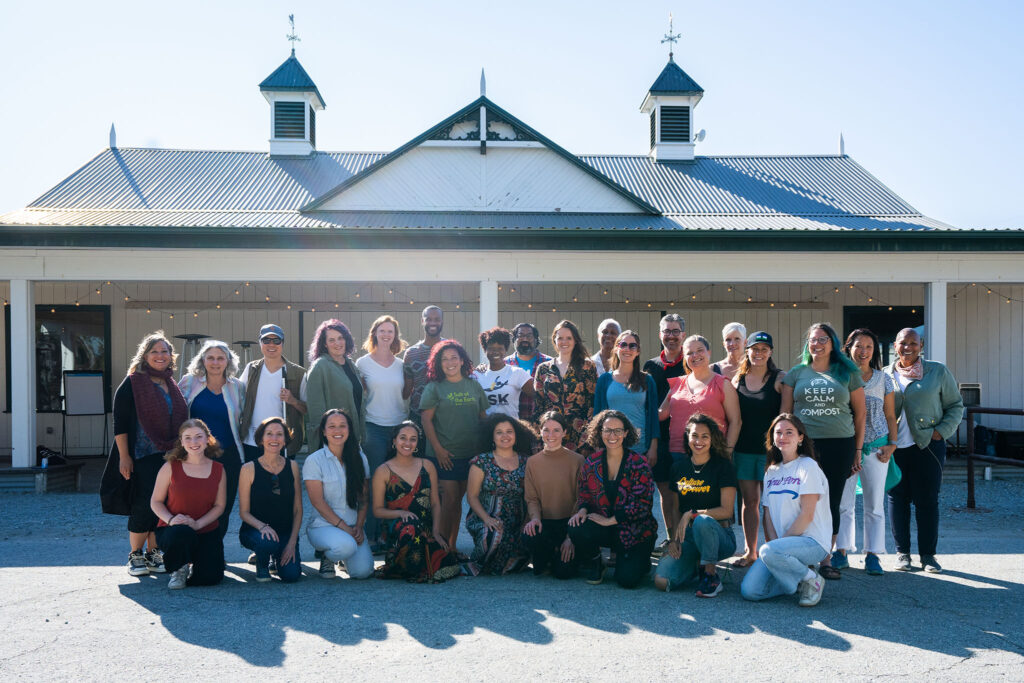
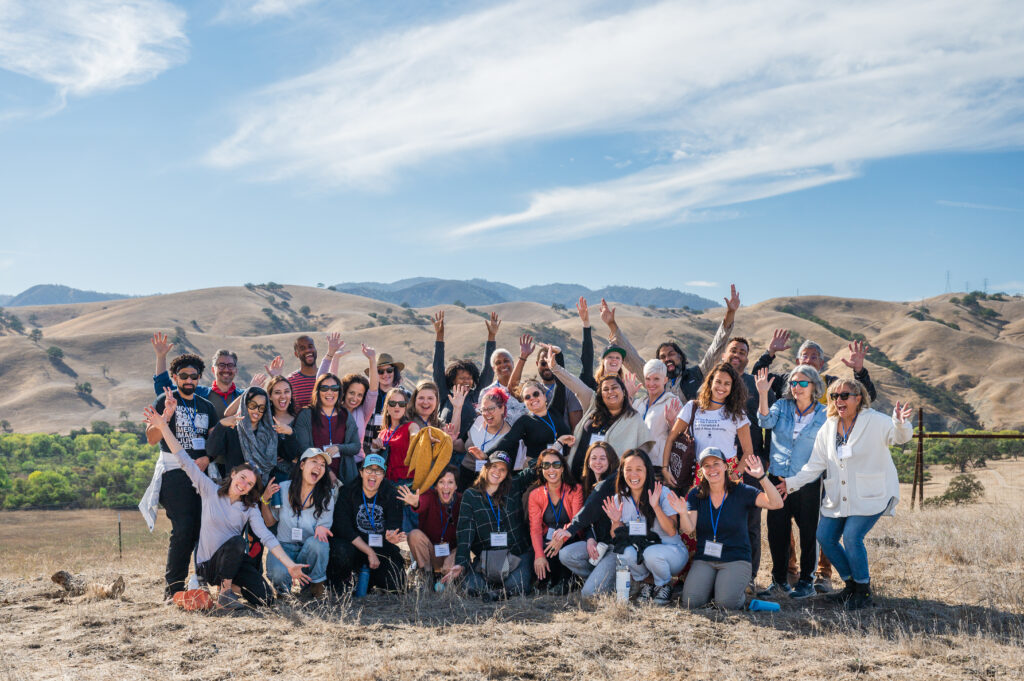
Photo: Paicines Ranch, CA, November 2018 of JEI’s second cohort, photo by Tina Beck

Roger Milliken is the board chair of the Baskaghegan Company. In this talk, he explores the conflicts between a thriving forest—and society—and the traditional practice of forest management.  Building on perspectives gained from 40 years of forest management and conservation, he describes the tensions experienced by those who are called to care for the region’s forests in this time of high stakes and difficult choices. He invites us to confront the conflicts between seeing the forest as resources for our use or recognizing it as a community to which we belong.

Filed Under: Uncategorized Tagged With: Reflections from Fellows

Leading with and Celebrating Feminine Values

October 28, 2021

Two years after participating in the second cohort of the Just Economy Institute (JEI), I’ve settled into a role that I had never imagined for myself. Since September 2019, I have been the Co-CEO of a family office in Toronto, Dragonfly Ventures, dedicated to a vision of humanity living synergistically with each other, the earth, her creatures, and spirit. We use a range of financial tools including grants and investments, together with relationship-based activities, like gatherings, to achieve this vision.  

For the first time, I am deeply embedded in the inner workings of the investment sector, a place that I didn’t believe I belonged in until my JEI experience. I’ve found myself quickly learning about its inner workings while at the same time deliberately trying to work outside of the conventions that were designed to make me and so many others feel uninvited.  

One of the ways that Dragonfly is trying to break free of this mold is by cultivating feminine approaches to our work, which are often absent in the world of finance. I use the word “feminine” rather than “female” intentionally: feminine qualities aren’t always associated with gender. As a cisgender straight woman, I have often led with masculine qualities including prioritizing logic and independence. I’m now in a company where our founder, my fellow Co-CEO, celebrates and encourages leading with feminine qualities. This gift has contributed to a journey of rediscovering attributes I realized I had disassociated from, perhaps to prioritize and emphasize masculine qualities I viewed as being more valued.  

What does this feminine approach look like in practice?  

One of Dragonfly’s core values is intuition, which we define as the recognition that we can go beyond conscious, evidence-based reasoning to access and be guided by the skills and experiences within us. We’re fortunate that our founder has strong and honed intuition skills, which she shares through monthly team workshops, that help us to develop our own practice. This allows our team to value and make space for intuition within our operations and encourage the same in the organizations and companies we work with. We called upon our intuition to respond to the COVID-19 pandemic. In addition to maintaining our support to existing grantees, we quickly decided to do an additional $1 million in philanthropic funding in both 2020 and 2021 to provide core operating support to organizations serving communities made especially vulnerable during the pandemic.  

Another way we center feminine values is by making space to nurture. We created our own asset classes to intentionally consider how closely each of our investments, including grants, contribute to achieving our mission. The investments that most closely align with our mission are called “nurture.” These contributions, first and foremost, prioritize mission and the care of people and the planet rather than the preservation of capital and/or a financial return.  

Another feminine quality we cultivate is collaboration. At Dragonfly we have a Co-CEO model that shares leadership between myself and our founder. This is a direct recognition of our different and complementary skill sets and of knowing the limits of our capacities. That awareness extends to our organization and the communities we serve, which is why we prioritize collaboration and shared learning. An example of that is our dedicated stream of funding to support collaborations amongst charities and funders to tackle long-term ambitious goals including the Coalition for Action on Toxics, Farmers for Climate Solutions, and Our Living Waters. 

The quality that I believe is most often associated with the feminine is emotion. I’ve seen emotion used as an excuse for why women shouldn’t be in leadership roles or make financial decisions. At Dragonfly Ventures, showing emotion and centring emotion is a strength. We recognize that emotions are an integral part of who we are and how we interact with the world; that if we internalize them, we continue to disconnect not only from ourselves and each other but also the earth; and this is in direct contrast to our mission and vision. This valuing our emotions informed our decision to offer all grantees the option of requesting a top-up grant to support the emotional health and well-being of their employees and volunteers. It is also reflected in the structure of our meetings. At the start of each meeting, we prioritize space to personally check in with one other so we can understand and attend to each of our emotional climates, knowing that directly informs how we show up in our work. 

The incorporation of these “feminine” values is not meant to replace or diminish “masculine” values; balance is essential. However, from our vantage point at Dragonfly Ventures, to reach our vision of humanity living synergistically with each other, the earth, her creatures, and spirit, we are long overdue in rebalancing the investment and philanthropic space. It’s time to lead with and celebrate feminine qualities. 

Photo Credits: Thumbnail: Alicia Arcidiacono, Paicines Ranch, CA, November 2018.
Above: Photo by Tina Beck, JEI’s second cohort

Wendy Cooper serves as Co-CEO of Dragonfly Ventures working in partnership with the founder and the rest of the team to advance solutions for a clean, healthy planet and equitable society by creatively using a suite of financial tools grounded in relationship. Prior to joining Dragonfly Ventures, Wendy worked in the charitable and philanthropic sector for nearly two decades at a community, regional, and national level supporting a range of areas including land conservation, Indigenous youth leadership, freshwater health, and toxic elimination.

Filed Under: Uncategorized Tagged With: Reflections from Fellows

Reflections on a Relationship-Based Economy

September 28, 2021

If you take some time to reflect, you realize that some of our most trusted relationships are economic. That is not to say you can’t get burned by a bad purchase or a bad investment, but the exchange of goods and services is fundamentally an exercise in trust.  

Historically, this makes sense. In early human history, the core of nearly all communities was (and for many, still are) our family of origin. The secondary community we engaged with was typically a group of friends and other members of our clan or tribe. This was followed by those with whom we exchanged goods and services. If we grew corn and folks near us made fishhooks, we could trade in a mutually beneficial way: a reliable supply of good corn + reliable supply of good fishhooks = trust.  

However, as the mechanisms and processes of these exchanges have become further removed from actual human entanglements, the more our social bonds have eroded. As our mechanisms of exchange (not to mention personal relationships) have become more physically remote, we have also become less connected to, and less trusting of, one another. Online shopping, online relationships, and the virtual world are not as durable, connected, or transparent as real-life experiences. Perhaps that is the question of our time: how do we build and maintain essential trust in an increasingly virtual world?  

Collectively, we have watched (and participated in) the ongoing aggregation and concentration of wealth. This process has occurred over many generations, and the resounding inequity it has wrought continues to breed deep distrust of the system and of each other. To counter this, some might suggest we need to build a competing monolith to combat the strength and power of the incumbent system, while others believe we should just blow it all up and start over. I believe that both scenarios would be seriously harmful in the near term, and what we really need is to shift our focus to building a system that is just at its core.  

By pursuing a distributed approach to opportunity, ownership, and power we can ultimately harness the inherent creative energy in each of us, which can leverage a virtually unlimited source of inspiration and abundance for our collective good. While many of the resources that we depend upon are not limitless, our creative capacity knows no bounds.  

Similarly, when human creativity is combined with meaningful, purposeful relationships, there are no limits to what we can accomplish. We are constantly learning about new discoveries and applications of knowledge that can help us navigate challenges, and new businesses are being formed to address gaps in our lives every day.  

This highlights the importance of the relationship as the centerpiece of an enduring economic future that is generative rather than extractive. In an extractive model, everything, including human capital, serves as a means to an end. In a generative, relationship-based model, the ends are the means – resilient, thriving communities reflect the healthy relationships among people and the resources they depend upon. If the human species is to endure, we must concentrate our efforts on building lasting relationships with one another, as well as with the community assets – land, air, water – that we all share.  

If the human species is to endure, we must concentrate our efforts on building lasting relationships with one another, as well as with the community assets-land, air, water-that we all share.

It is from this perspective that I consider some of the partnerships formed both within and beyond our Just Economy Institute cohort. Not only did my experience as a Fellow help me to refine my own assumptions about the relationship between people and capital, but it also helped affirm that our fellow humans are truly the heart of any worthwhile endeavor.  

Among several deep connections I made, one has resulted in some of the most impactful, thoughtful work in which I have had the honor to participate. When I met Nina Robinson in the JEI Fellowship, she was transitioning her approach to integrated capital, and is now Director of RUNWAY, an organization that envisions a world where Black entrepreneurs thrive in a reimagined economy rooted in equity and justice. And I was diving deeper into our efforts at HomeStake Venture Partners to figure out how best to structure capital to further our commitment to distributed opportunity, ownership, and power while promoting the idea of self-determination both from the community perspective (defined geographically and/or thematically) as well as from the founder/entrepreneur perspective.   

Nina had been working with Chef GW Chew, who had recently won the Bay Area’s Food Funded competition, and whose line of plant-based proteins at Something Better Foods was gaining the attention of significant retailers and investors. She was concerned that some of this interest in Chef Chew’s company and its products might not be aligned with his personal and business goals, and subsequent conversations proved she was right.  

We encouraged and supported Chef Chew to take time to think about how he might be better positioned to accomplish his goals of retaining control of his company while meeting the needs of his community to access reasonably priced, healthy food alternatives. Together, as entrepreneurs, resource providers, and investors, we developed a plan that helped Chef Chew take a more intentional approach to growing and financing his business. We believe that the positive outcome of this important process is directly attributed to the time we took to build a lasting, equitable relationship amongst all stakeholders.  

Today, Something Better Foods continues to thrive and attract customers and investment capital AND is aligned with its founder’s vision and values. Nina and I continue to engage in energizing and creative conversations about how we can work together to help drive the creation and embrace of an economic system that puts human connection and generative capital at the center.  

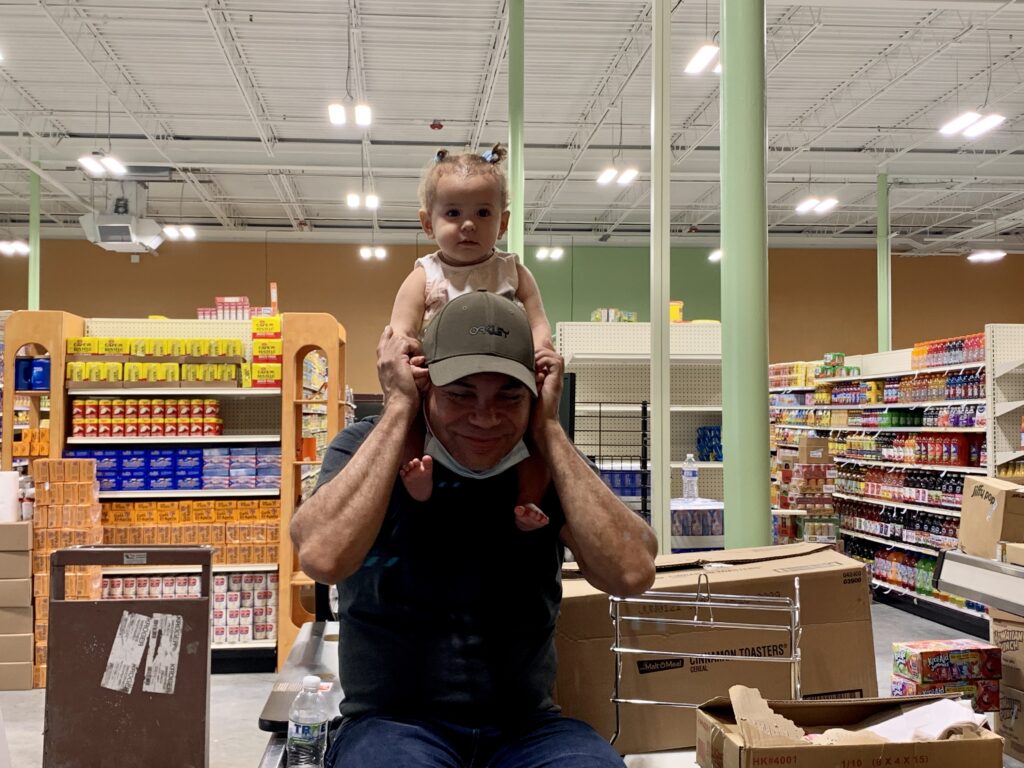
Images: (above) Chef GW Chew, Founder of Something Better Foods and team, and (top photo) image from Bill’s home state of Montana.

Bill Stoddart is a financial activist who connects people and ideas to create opportunities for transforming the capital markets. Through his independent advisory and consulting firms, 45North Partners and NorthFork Financial, and as a co-founder of HomeStake Venture Partners, an innovative platform to help mid-market businesses access growth capital from locally minded investors, he is deeply committed to distributing opportunity, ownership, and power. Bill was part of the first cohort of the Just Economy Institute. 


Filed Under: Uncategorized Tagged With: Reflections from Fellows

A Conversation with JEI alumni Nwamaka Agbo & Chris Olin

July 14, 2021

Nwamaka Agbo, CEO of the Kataly Foundation and Managing Director of the Restorative Economies Fund, and Chris Olin, board member of the Kataly Foundation, participated in the Just Economy Institute in 2017-18 and 2019-20, respectively. Below, the two share their reflections on what brought them to the program, the collaborations it led to, and how the program surprised them. 


What drew you to the Just Economy Institute (JEI)?

Nwamaka Agbo: When I came to JEI (formerly known as the Integrated Capital Institute), I had an understanding of how racism is baked into our financial system, but I wanted to see what was behind the curtain. In the systems of finance and investment, the decisions people make often seem arbitrary from the outside looking in. JEI was an opportunity to understand who was making those choices and why. 

When it comes to building community wealth and doing systems change work, we have to activate capital beyond grants. Through the institute, I learned about investment strategies and really considered what it would require for us to do things fundamentally differently. 

Chris Olin: I applied to the program after a sabbatical from my work in the family business, where I had been accumulating wealth for the benefit of the family. What appealed to me was a space where there would be a discussion about the activation of capital in a service modality rather than a wealth accumulation modality. 

As I was applying, we were beginning the formation of what would become the Kataly Foundation. I wanted to learn with other people investigating the same questions around alignment of capital that benefits communities, the environment, and economic activity—but in a non-extractive way.

How did you feel supported by others in the program? What collaborations came from your participation?

Nwamaka: The relationships were the key thing that came out of participating in the program. Many people I work with now through the Restorative Economies Fund (REF) were people I met through JEI. For example, Lynne Hoey, who is the incoming Chief Investment Officer at the Kataly Foundation, and Jessica Norwood, founder of Runway and a grantee of REF, were both in my cohort. 

At our closing session, I shared that I needed to go on a writing retreat to explore my body of work more fully. Dawn McGee, an advisor with JEI, supported me to do that. I continued with a prompt that began at the program—if we could have access to 100 million dollars, what would we do and design? The audacity to dream so big actually felt really painful at first, given my class and race background and experience, but I wanted to follow through on it. It was at the writing retreat that I envisioned what is now the Restorative Economies Fund. Shortly after I returned I met with Chris and Regan and we established the fund, which was capitalized at $300 million. It was incredible to have the spaciousness to be with people, dream big, and put that idea into the universe. 

What surprised you about JEI?

Chris: There was a focus on presence, groundedness, and the emotional side of finance and investment, which was totally unexpected and brilliantly facilitated by the leaders. There was a powerful exercise where everyone shared their money stories in small groups. I remember thinking, how does this fit into the technical curriculum of integrated capital? But now I’m grateful for being exposed to that side of the story because capital and investment create a tremendous emotional burden for people working in financial industries.

Working in the capitalist mode was a lot easier. My goal was to lose as little money as possible, with the least risk. Now it is a multidimensional equation: who has the power to make decisions with respect to money? 

While it has been tremendously rewarding for me to empower other folks to make decisions related to money through philanthropic projects, it also has an emotional cost for folks who participate in that work that I would never have anticipated. 

Nwamaka: Typically, the ways we think about wealth and finance have been private. JEI invites us to be really honest and clear about the power and privilege that we hold or may not have access to. What does it look like to own that and make decisions from an informed place? That is important if we are to fully repair, transform our economy, and shift our relationship to capital.

Filed Under: Uncategorized Tagged With: Reflections from Fellows

  • Page 1
  • Page 2
  • Go to Next Page »

Footer

Sign up for E-mail Updates

Stay connected and learn what’s new with JEI

Get E-mail Updates!

© copyright 2026 Just Economy Institute
info@justeconomyinstitute.org | site credits